
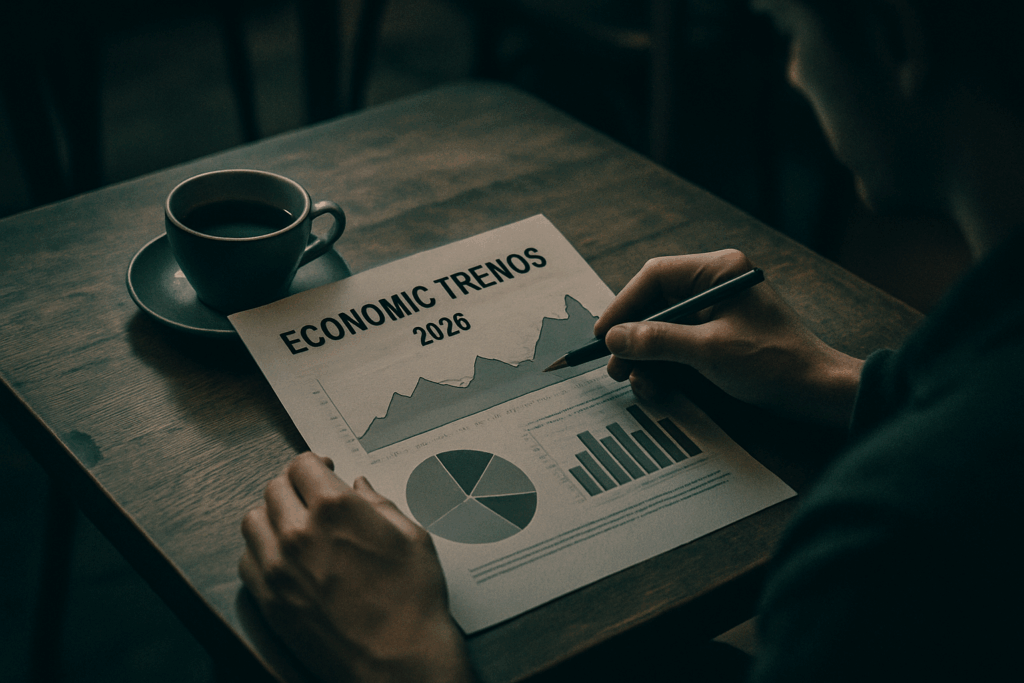
Why Investors Track Economic Indicators
Understanding the broader economic landscape is no longer optional for serious investors. In 2026, volatile global markets, shifting policies, and emerging technologies mean that staying ahead requires more than just stock picking it requires macro awareness.
How Economic Data Shapes Risk and Opportunity
Economic data isn’t just background noise; it’s a compass for decision making.
Trend Confirmation: Indicators like GDP growth or inflation help investors confirm market trends or spot reversals.
Asset Allocation: Knowing whether the economy is expanding or contracting can influence the balance between equities, bonds, and alternative assets.
Risk Assessment: Certain indicators, such as jobless claims or industrial output, give early warnings about economic stress or resilience.
The Role of Macro Trends in Portfolio Positioning
Staying aligned with big picture forces can amplify returns and reduce vulnerability.
Long Term Themes: Investors should monitor multi year trends like demographics, climate policy, and global trade patterns.
Market Cycles: Understanding where we are in the economic cycle shapes decisions around growth vs. value, domestic vs. international exposure, and duration in fixed income.
Sector Rotation: Macro shifts often spark capital movement across sectors such as from consumer discretionary to staples or from tech to industrials.
Connecting the Dots: Policy, Markets, and Sentiment
Economic indicators serve as a thread between policymaker decisions, market reactions, and investor psychology.
Monetary and Fiscal Policy: Interest rates, government spending, and taxation impact broad capital flows.
Market Interpretation: Data releases often move markets not just because of what they say but how they compare to expectations.
Investor Sentiment: Indicators like consumer confidence or business outlooks reflect underlying mood and can either reinforce or diverge from market behavior.
This section forms the foundation for why each of the indicators in this report matters. It’s not about predicting the future perfectly it’s about having a framework to respond intelligently as it unfolds.
GDP Growth: Still the Big Picture Metric
Gross Domestic Product (GDP) remains the cornerstone indicator for assessing overall economic health and forecasting market direction. As of mid 2026, the data from Q1 and Q2 reveals crucial insights into how the economy is performing and where investors may find opportunities or need to hedge risk.
Q1 and Q2 Momentum Check
Early 2026 GDP numbers show a moderate but sustained uptick in overall economic activity.
Q1 2026: GDP expanded at an annualized rate of 2.4%, driven largely by resilient consumer spending and strong export performance.
Q2 2026: Growth accelerated slightly to 2.8%, led by gains in business investment and service sector demand.
These figures suggest that the economy is not overheating, but it remains healthy providing a stable backdrop for long term investments.
Sectoral Growth Leaders
Understanding what sectors are contributing to GDP growth helps investors better allocate capital.
Technology & AI Services: A renewed surge in automation and enterprise AI adoption fueled outsized gains.
Healthcare: Sustained demand and regulatory support have contributed to above average performance.
Construction & Infrastructure: Ongoing public investment in green infrastructure drove capital utilization in Q2.
Energy: Renewables outpaced fossil fuels in terms of growth rate, especially in solar and battery logistics.
The Policy Effect: Fiscal and Monetary Moves Matter
Both government spending and central bank actions have had a measurable impact on GDP performance.
Fiscal Policy: The Infrastructure Renewal Act of 2026 injected federal funds into transportation, clean water, and broadband expansion, boosting employment and regional investment.
Monetary Policy: The Fed’s rate holding pattern in the first half of 2026 curbed inflation without stalling growth, creating room for private sector expansion.
Tax Incentives: Capital expenditure tax credits incentivized business re investment, particularly in manufacturing and logistics.
Key Takeaways for Investors
Steady GDP growth supports a cautiously optimistic market outlook.
Sector specific trends should inform asset allocation.
Watch for any signs of decelerating momentum in Q3 guidance and revisions to Q2 estimates.
GDP data may arrive quarterly, but its ripple effects shape markets daily. A nuanced reading can help investors stay ahead of the curve.
Inflation Rates and the Fed’s Balancing Act
Inflation in 2026 is more manageable than in past years, but it’s still sticky. The Consumer Price Index (CPI) and Personal Consumption Expenditures (PCE) are tracking a slow descent not free fall. Year over year CPI has hovered in the mid 3% range most of the year, while Core PCE, the Fed’s preferred gauge, has inched down closer to its 2% target, but not quite there. Food and housing prices are stabilizing, but services remain hot.
That gap matters. The Fed’s public stance is clear: it’s not cutting rates until inflation convincingly trends toward target. What’s changing is the market isn’t just listening it’s bracing. Investors have stopped pricing in aggressive cuts. Instead, they’ve adjusted to a long haul scenario where rates stay elevated longer than expected.
The result? Capital is on the move. There’s a rotation underway out of interest rate sensitive growth plays and into more stable, income generating assets. Utilities, consumer staples, and short duration bonds are gaining favor. Commodities, especially energy, are back in the spotlight too, seen by some as both inflation hedge and geopolitical play.
Bottom line: Inflation isn’t just an economic reading it’s calling the tune for 2026’s investment strategy. Understanding how CPI and PCE influence Fed moves is less about economics and more about spotting where the money’s heading next.
Labor Market Health and Its Market Implications
The labor market is still one of the cleanest mirrors of underlying economic health and in 2026, it’s sending mixed but telling signals. Unemployment is sticking near historic lows, but that number alone doesn’t tell the whole story. What really matters now is labor force participation. More people are re entering the job market not because they suddenly found opportunity, but because inflation and cost of living have edged them back in. That’s creating a tension: low unemployment, but not always for great reasons.
Wage growth is slowing but still beating inflation in some sectors, especially tech, logistics, and healthcare. Layer in productivity data, and the picture gets clearer firms are learning to do more with less, often aided by automation and smarter workflows. If that trend holds, equities could get a lift from margin expansion, not just top line revenue.
Then there’s the JOLTS data the most watched spreadsheet in some investor circles right now. Job openings are a proxy for business confidence. As openings normalize post peak, it tells us companies are cautious, but not panicked. Too sharp a drop, though, and markets will read it as a pullback signal. For now, it’s a wait and watch game. But make no mistake: labor data isn’t just employment stats it’s market messaging in disguise.
Consumer Confidence and Retail Spending

Retail sales in early 2026 have drawn a clear line between economic mood and economic means. Broken down by income bracket, the divergence is sharp. Households earning under $50K are dialing back across non essentials cutting restaurant visits, delaying apparel purchases, opting for value brands. Meanwhile, higher earners have barely tapped the brakes. Luxury retail, high end electronics, and travel continue to see strong pull through, driven by pent up demand and resilient asset portfolios.
Why does this matter to investors? Because sentiment data, often brushed off as “soft,” is quietly steering market direction this year. Consumer confidence surveys are proving predictive. When optimism dropped in mid Q1, retail stocks followed. When confidence stabilized in late March, discretionary ticked back up. It’s not perfect, but it’s become a reliable weather vane in a data heavy landscape.
As for categories, essentials keep a steady pace groceries, healthcare, home maintenance. Discretionary, though, is where the volatility lives. Streaming bundles and fast fashion have outperformed, while home goods and fitness gear lag. Investors looking for growth in retail should watch the middle: not the lowest cost items or luxury extremes, but the accessible, flexible brands that adapt to both sentiment and income pressure.
Yield Curve Movements and Interest Rate Signals
Right now, the shape of the yield curve is sending a cautious if not outright bearish signal. The curve remains inverted, with short term Treasury yields still higher than longer term ones. Historically, that’s been a reliable precursor to economic slowdowns. When investors accept lower yields for locking up their money longer, it often means they expect rates (and growth) to fall in the future. We’re not out of the woods yet.
The big spreads to watch month by month are the 2 year vs. 10 year and 3 month vs. 10 year. These indicators flipped negative months ago and have stayed there. Any movement back toward neutral or positive territory could hint at a recovery, but staying inverted keeps recession risk firmly on the radar.
For investors, this curve has real implications. On the bond side, demand for longer dated Treasuries has crept up both as a flight to safety and as a bet on falling rates. For banks, an inverted curve is bad news for net interest margins, potentially pressuring earnings. Meanwhile, dividend stocks, especially in defensive sectors like utilities and consumer staples, tend to hold their ground in uncertain growth conditions. That’s where a lot of cautious capital is headed.
Bottom line: The yield curve is still flashing yellow. Keep watching the slope it’s one of the cleanest signals we have of what markets expect next.
Manufacturing, Services & the ISM Indexes
Investors are leaning harder than ever on PMI data to guide decisions especially in an economic year that’s more fragmented than fluid. Purchasing Managers’ Indexes (PMIs), especially those from ISM, are offering real time reads on business sentiment that are directly hitting equity pricing and commodity trades. If the manufacturing PMI shows contraction even by a sliver cyclical stocks start to feel the pressure. Meanwhile, a stronger than expected services PMI often buoy sectors tied to consumer behavior and tech heavy business services.
The real story of 2026? The gap between manufacturing and services. Manufacturing continues to lag, weighed down by global supply friction and softer export demand. This is keeping industrials in a cautious holding pattern. Services, on the other hand, are showing resilience, powered by a labor shift toward non physical sectors and an uptick in digital consumption. It’s not just a divergence it’s a decoupling.
Then come the surprises. The ISM reports monthly fixtures for market watchers have delivered more than a few curveballs this year. A sudden spike in new orders or unexpected drop in inventory sentiment can swing futures pre market. Traders are baking these reports into short term positioning, but long term investors are also adjusting allocations, especially in energy and base metals, which are highly sensitive to these ripple effects.
Dollar for dollar, ISM data remains one of the most predictive and volatile indicators on the docket. Ignore it at your own risk.
Bonus: Watching the Tech Sector for Early Signals
Tech doesn’t wait. Historically, the sector tends to react ahead of other industries when macroeconomic tides shift. That’s partly because tech valuations hinge more on future cash flows and expectations than current earnings. When interest rates budge or productivity forecasts jump, tech sees it coming first and moves.
Why the lead time? Two main reasons. One: sensitivity to rates. Many tech companies, especially high growth ones, lean heavily on discounted future profits. Even a small change in the Fed’s tone can ripple fast. Two: the sector thrives on productivity gains. If AI, cloud, or automation trends point to higher efficiency across industries, investors quickly pivot to tech as the enabler.
Bottom line: if you want an early read on where investors think the economy is headed, keep an eye on tech. Its moves aren’t just speculation they’re often signals. For a deeper analysis, check out Tech Stocks Outlook: What’s Next After 2026’s Rally.
Staying Informed, Staying Ahead
Build Your Own Indicator Watchlist
Every investor operates with unique goals, timelines, and risk tolerance. That means the economic indicators you follow should be tailored not templated. Crafting a personal watchlist can help cut through the noise and highlight only the data that drives your specific portfolio decisions.
Consider building your watchlist around:
Time horizon: Are you a short term trader or long term investor? You’ll want different data monthly job reports vs. quarterly GDP, for example.
Asset class focus: Equities, fixed income, commodities, or real estate? Each tends to react to different signals.
Geographic exposure: U.S. centric data may be less relevant if you’re globally diversified.
Macro themes you’re tracking: Inflation, consumer behavior, interest rates, tech innovation, or energy markets.
React But Don’t Overreact
Economic indicators can cause dramatic market moves but that doesn’t always mean you should shift your strategy. Market sentiment often moves faster than fundamentals. The challenge is to stay aware without becoming impulsive.
Keep these principles in mind:
Track trends, not just headlines
Incorporate data into your analysis not your emotions
Avoid reacting to every report; focus on persistent direction
Evaluate surprises in context not isolation
Final Thought: Economic Data Evolves So Should You
Don’t treat your indicator strategy as one and done. Economic cycles evolve, new metrics emerge, and priorities shift. The best investors maintain a flexible, informed approach. That means:
Regularly reviewing which indicators are leading your sector
Staying current on how markets are interpreting data in real time
Adjusting your watchlist as your portfolio or views change
The smartest strategy isn’t to predict every move it’s to stay aligned, stay informed, and stay adaptable.
 There is a specific skill involved in explaining something clearly — one that is completely separate from actually knowing the subject. Rodney Singherton has both. They has spent years working with market trends and analysis in a hands-on capacity, and an equal amount of time figuring out how to translate that experience into writing that people with different backgrounds can actually absorb and use.
Rodney tends to approach complex subjects — Market Trends and Analysis, Investment Strategies and Insights, Financial Planning Resources being good examples — by starting with what the reader already knows, then building outward from there rather than dropping them in the deep end. It sounds like a small thing. In practice it makes a significant difference in whether someone finishes the article or abandons it halfway through. They is also good at knowing when to stop — a surprisingly underrated skill. Some writers bury useful information under so many caveats and qualifications that the point disappears. Rodney knows where the point is and gets there without too many detours.
The practical effect of all this is that people who read Rodney's work tend to come away actually capable of doing something with it. Not just vaguely informed — actually capable. For a writer working in market trends and analysis, that is probably the best possible outcome, and it's the standard Rodney holds they's own work to.
There is a specific skill involved in explaining something clearly — one that is completely separate from actually knowing the subject. Rodney Singherton has both. They has spent years working with market trends and analysis in a hands-on capacity, and an equal amount of time figuring out how to translate that experience into writing that people with different backgrounds can actually absorb and use.
Rodney tends to approach complex subjects — Market Trends and Analysis, Investment Strategies and Insights, Financial Planning Resources being good examples — by starting with what the reader already knows, then building outward from there rather than dropping them in the deep end. It sounds like a small thing. In practice it makes a significant difference in whether someone finishes the article or abandons it halfway through. They is also good at knowing when to stop — a surprisingly underrated skill. Some writers bury useful information under so many caveats and qualifications that the point disappears. Rodney knows where the point is and gets there without too many detours.
The practical effect of all this is that people who read Rodney's work tend to come away actually capable of doing something with it. Not just vaguely informed — actually capable. For a writer working in market trends and analysis, that is probably the best possible outcome, and it's the standard Rodney holds they's own work to.